The SYDIS OMT transformer monitoring system is used to monitor the condition and oversee the operation of medium- and high-power transformers. The system supports equipment health analysis—aimed at minimizing the likelihood of sudden failures—as well as the monitoring and determination of transformer loads, and assists in the regulation of power flows within the electrical power system. A key function of the system is the prediction of potential overloading and the time remaining before a transformer’s critical parameters are exceeded under current load conditions.
In SYNDIS OMT, all events registered by the system are archived and stored in real-time databases. The only limitation on the volume of data is the capacity of the storage disks used for archiving. The event log archive can be exported to external storage media.
The SYNDIS OMT system also automatically archives all raw and calculated analog values. This archive records analog values continuously over a specific period, defined by the number of days for which data is retained. The archive operates on a FIFO (first-in, first-out) basis, where new data overwrites the oldest stored entries. The short-term archive allows measurement values to be kept for a specific, user-defined number of days. Data stored in the short-term archive can be exported to a local disk or external storage media, enabling detailed analysis long after the initial archiving period has passed. The short-term archive is maintained within an internal real-time database.
In addition to the short-term archive, users have access to a long-term archive. Measurements are archived at time intervals defined in seconds or minutes, depending on the type and requirements of the specific installation. Furthermore, the system continuously monitors current measurement values; if an analog value changes by more than a specified threshold (e.g., 10%), that value is also archived. The primary advantage of the long-term archive is that it contains all measurement data collected since the system was first commissioned. The only limitation is the size of the disks used for archiving. As with the short-term archive, it is possible to export data from the long-term archive to external storage media. The long-term archive is stored in an SQL-based database (Oracle, MySQL).
The system generates warning, alarm, and emergency signals indicating the status of individual monitored units and their components. These signals and parameters enable supervisory personnel to quickly identify the location of any potential disturbance and assess the conditions for continued operation. []
For each transformer covered by the SYNDIS OMT system, the following warning, alarm, and emergency signals are transmitted to the higher-level system:
WARNINGS
ALARMS
EMERGENCY CONDITIONS
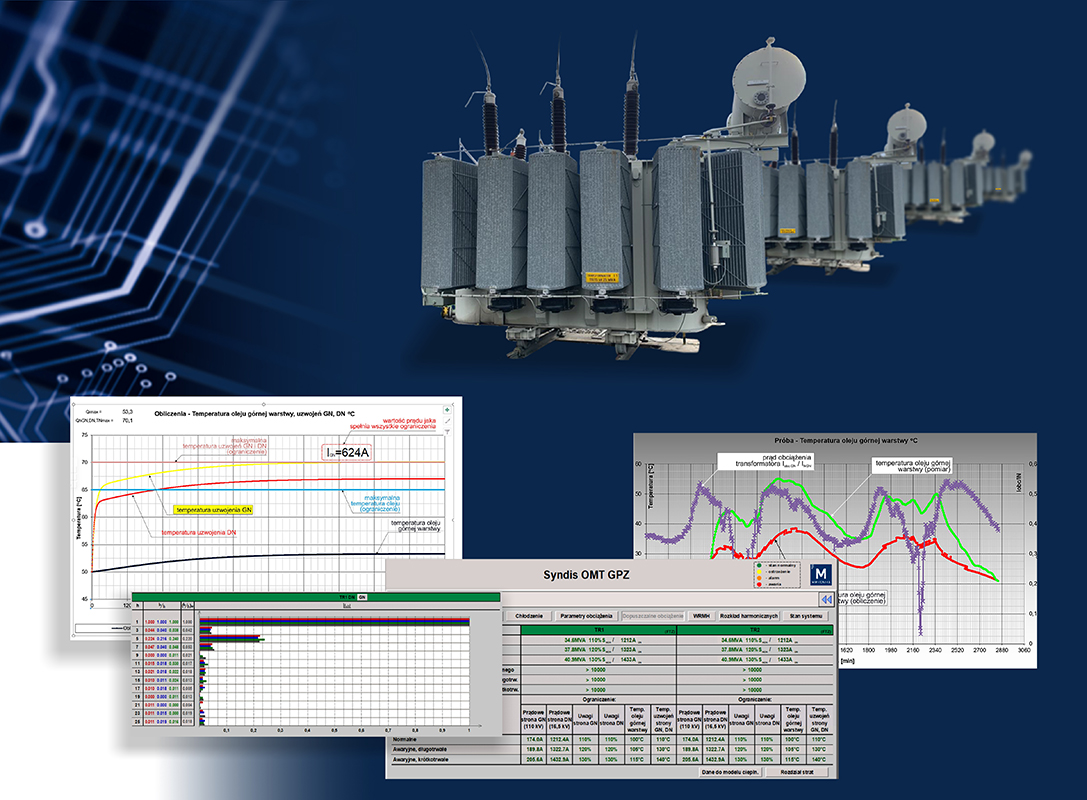
The system calculates power forecasts—specifically, the maximum load that can be applied to a transformer without exceeding defined temperature limits for its windings and oil. Current-based limitations are also taken into account.
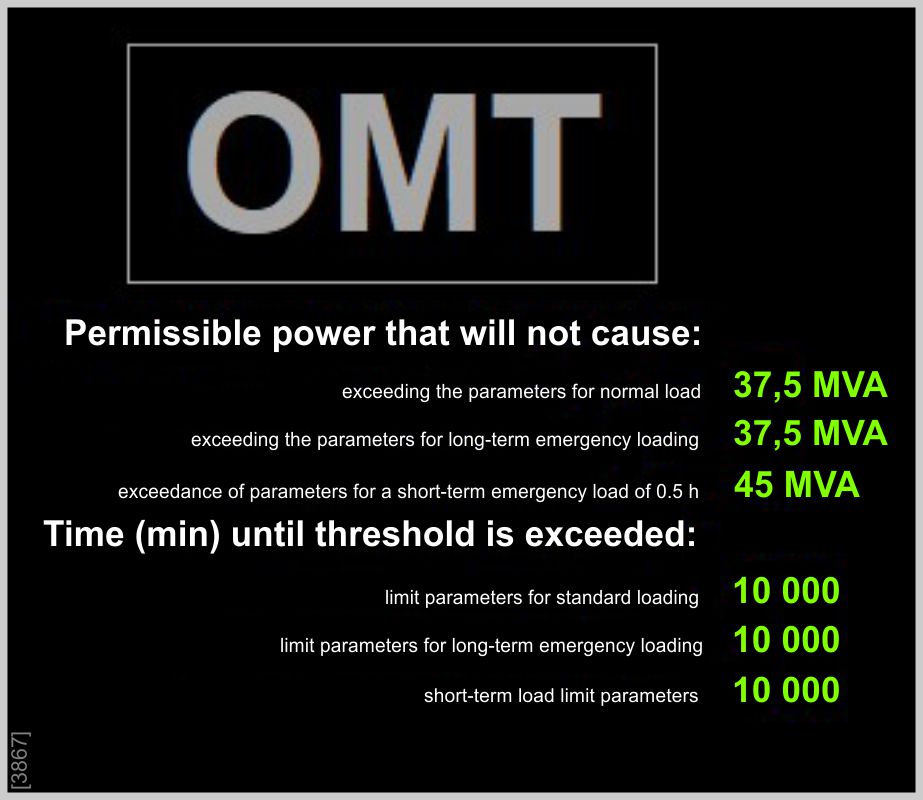
A thermal model of the transformer, integrated into the system, forecasts oil and winding temperatures based on the current cooling capacity and the transformer's existing thermal state. This enables the determination of the permissible load current for various operating scenarios, categorized as follows:
These analog values are transmitted to the supervisory system for each transformer; a visualization of this data within the supervisory system is shown in the figure on the right. []
The system incorporates a module that analyzes the impact of load current distortion on transformer load capacity. Based on an analysis of load current harmonics, load reduction factors are provided.
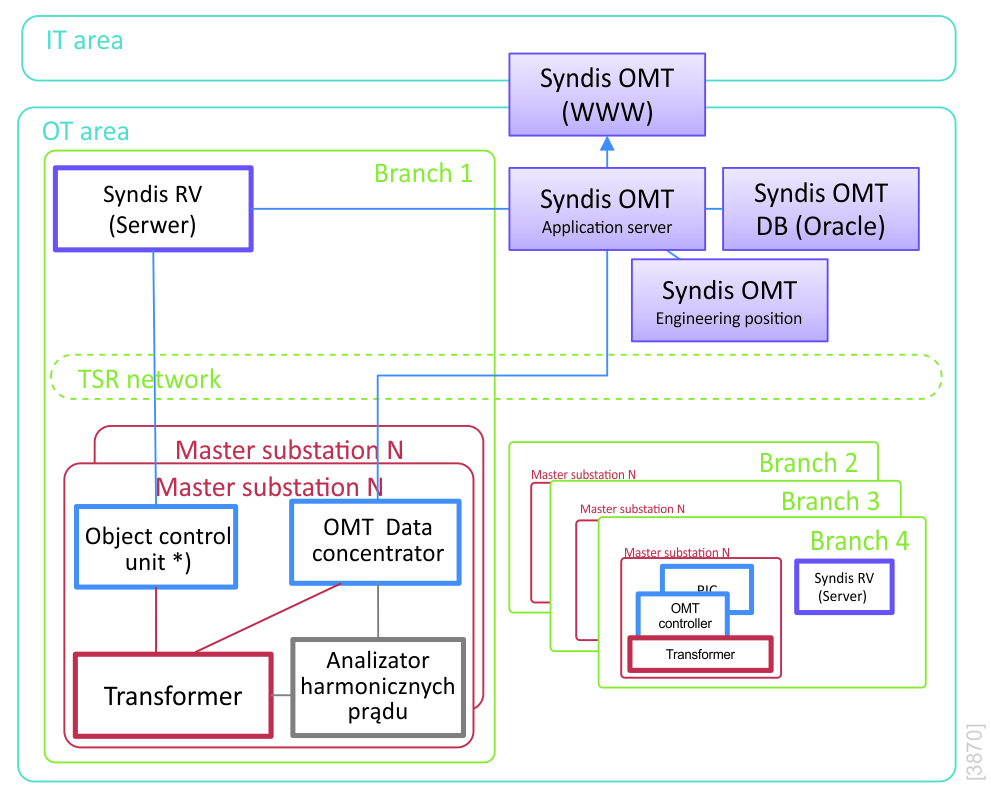
SYNDIS OMT is a real-time system with a modular structure. In general terms, the system consists of the following blocks. []
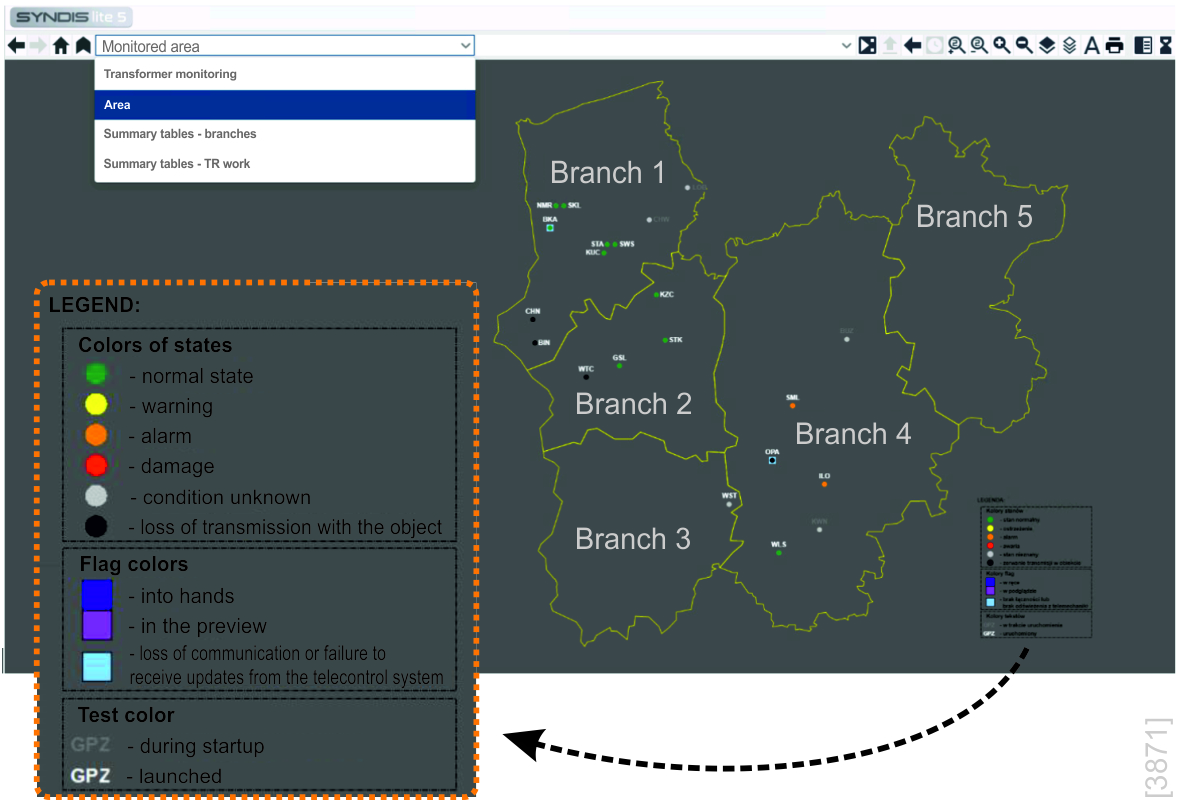
Launch the main map, which displays all the primary substations (GPZ) covered by the SYNDIS OMT system. See the figure adjacent.
Detailed maps show the transformers monitored within a single primary substation (GPZ), and clicking on its symbol allows you to view its status. []
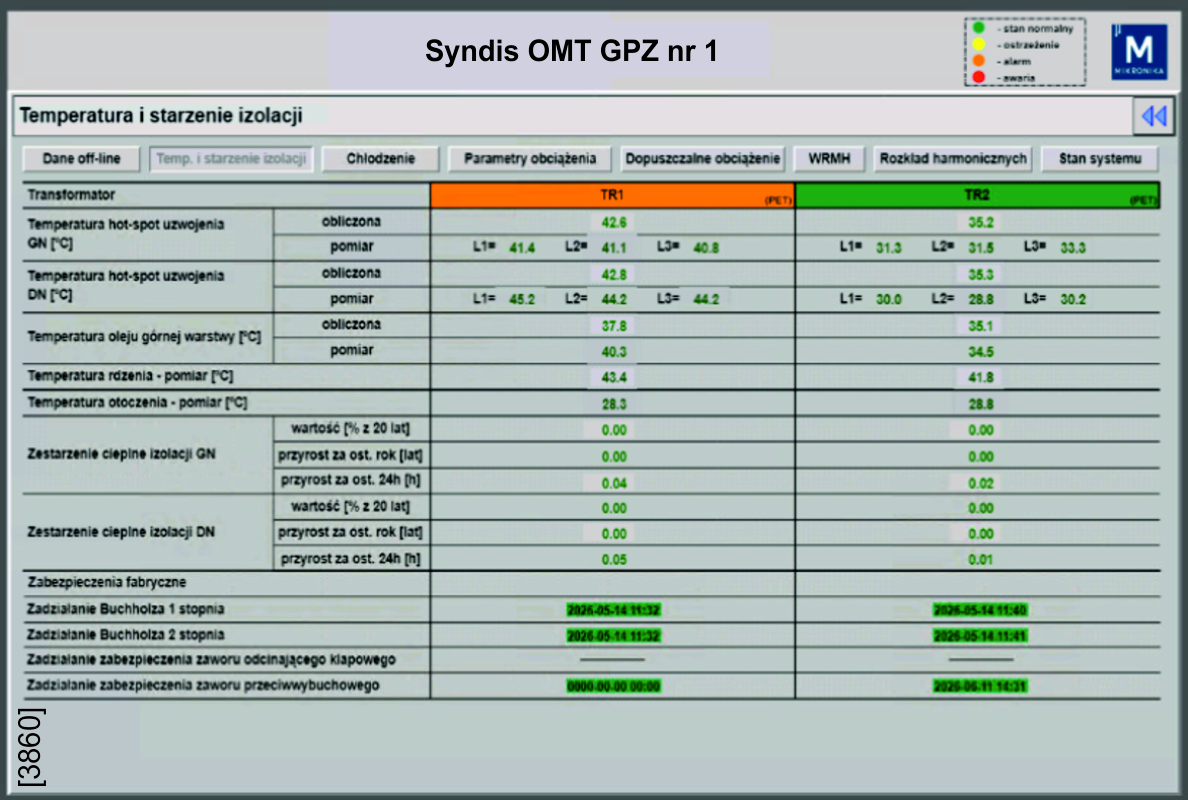
The system presents data in a tabular format for all transformers monitored within a primary substation (GPZ). Information, along with descriptions of the parameters, is organized into rows within various thematic windows. Each column displays data for a specific monitored transformer. The background color used to identify a transformer at the substation corresponds to the color-coding shown on the master map (normal = green, warning = yellow, alarm = orange, emergency = red).
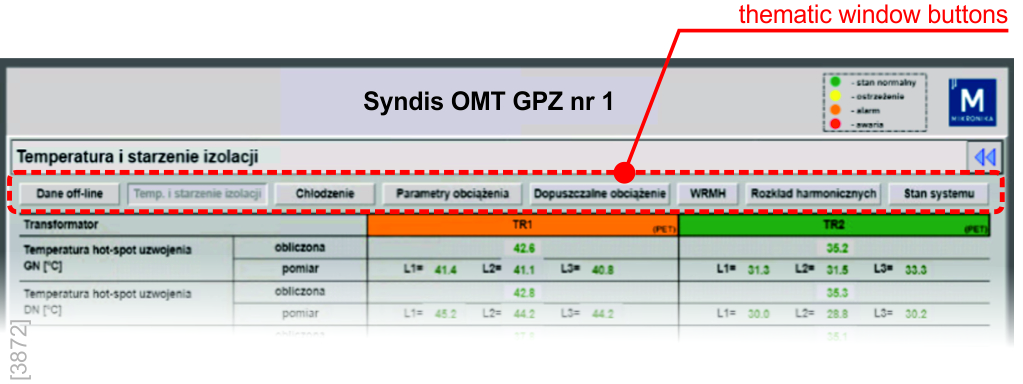
The system includes thematic windows that can be accessed by clicking a button located at the top of the window for each individual transformer at the substation:
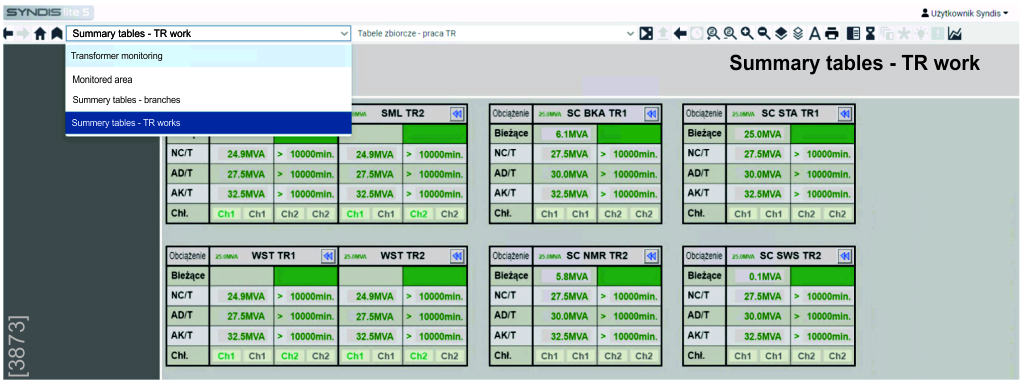
Additionally, the system provides a window containing a summary table of the signals visualized in the SYNDIS OD supervisory system. This table includes current loads, calculations of permissible power levels, and the time remaining before permissible parameters are exceeded. This is illustrated in the adjacent figure. []
The system allows for the generation of charts, reports, and histograms, all of which are accessible via the "Event Log." This log contains a record of all triggered abnormal states—such as warnings, alarms, and emergency alerts—that have been captured by the system.
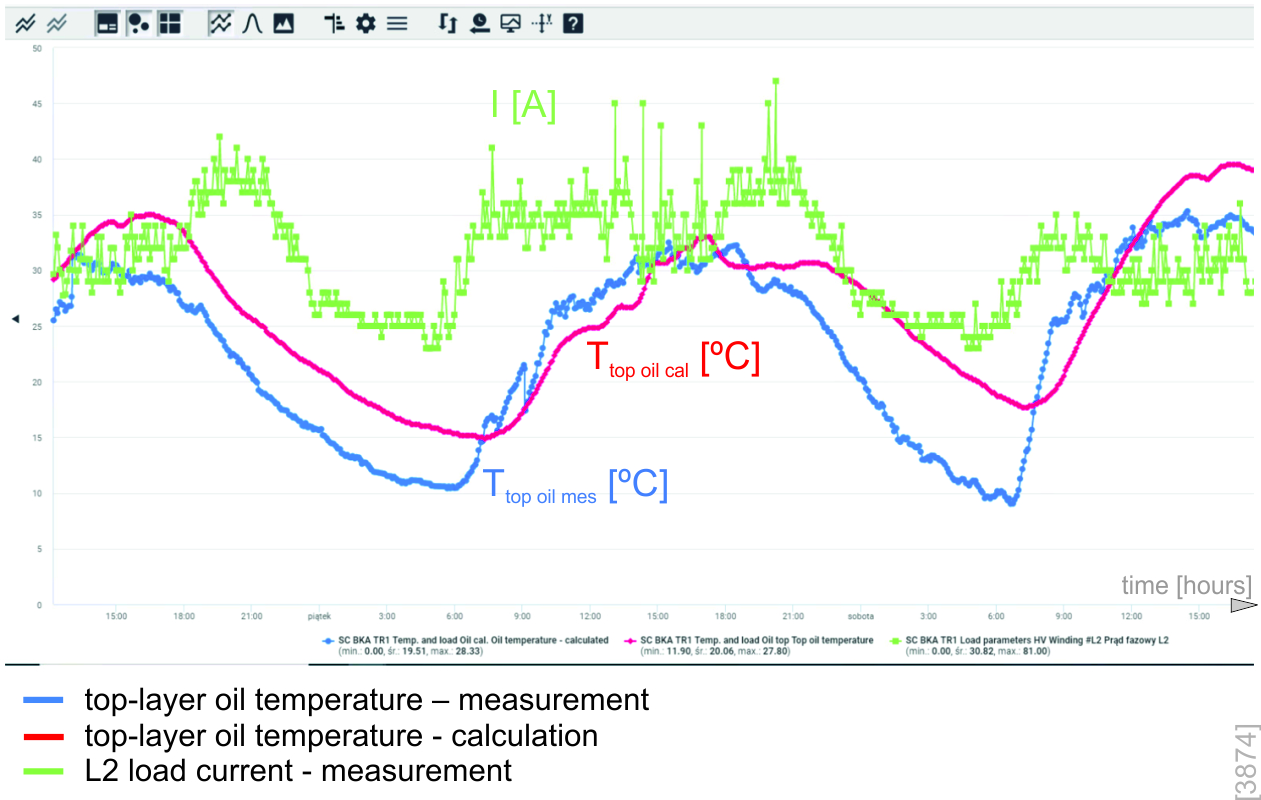
It is possible to create a chart for any parameter recorded within the system. The window for the chart-generation tool is shown adjacent to this text. []
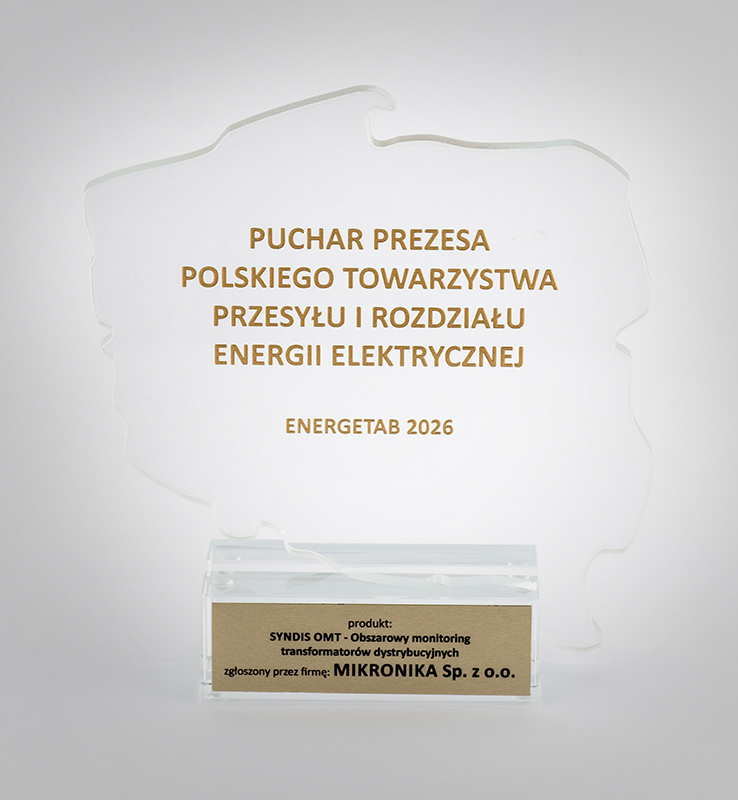
At the Energetab 2026 trade fair, "SYNDIS OMT – Area-based Monitoring of Distribution Transformers" received an award from the President of the Polish Electricity Transmission and Distribution Association. Our product serves as a solution to the growing needs of grid operators regarding the monitoring and diagnostics of energy infrastructure, and acts as a tool for the effective management of power flow within the electrical power system. []